What cupping does
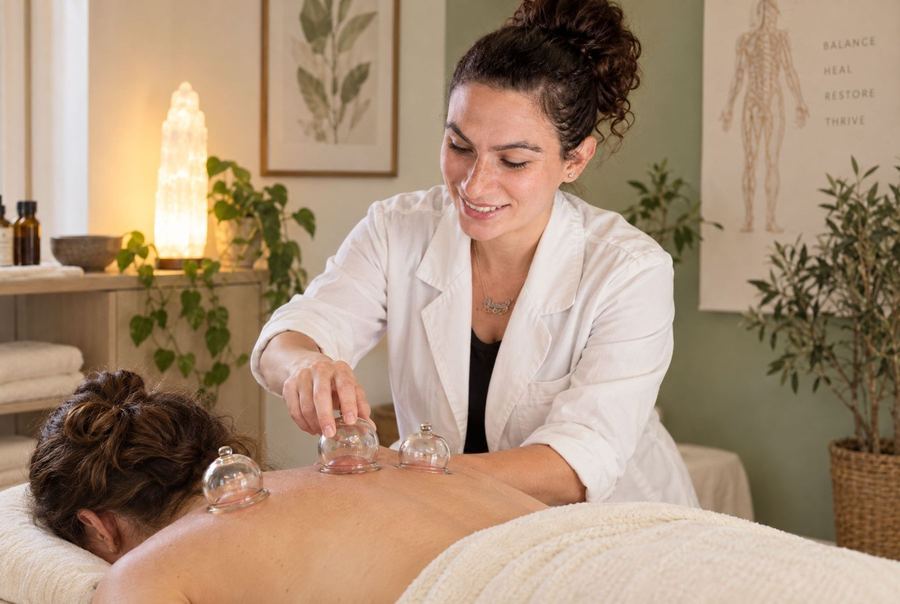
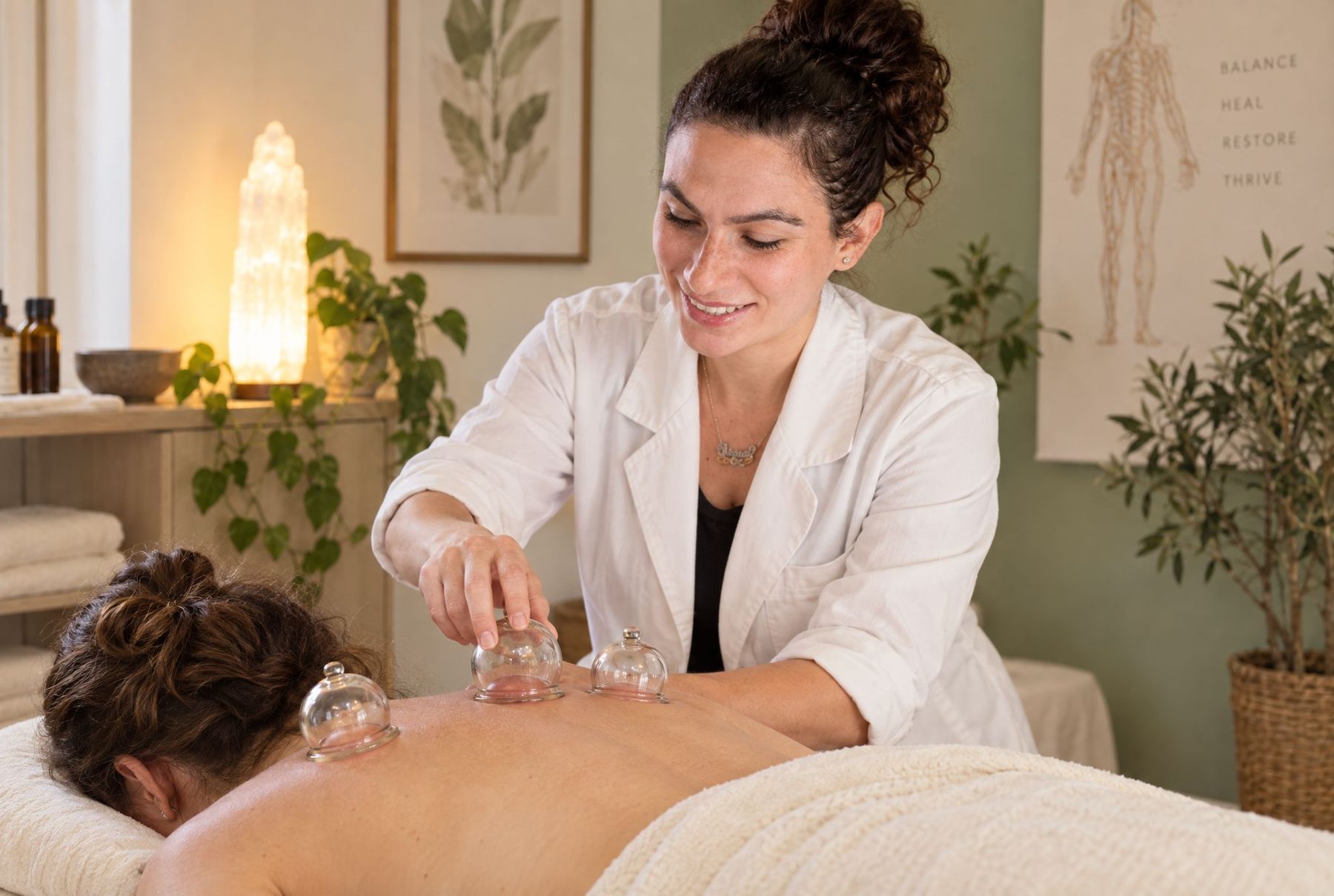
Cupping works in the opposite direction to massage. Instead of pressing into the muscle, glass or silicone cups create gentle suction that lifts the skin and fascia, separating layers of tissue that have become stuck and drawing fresh circulation into the area. Most people describe it as a deep, satisfying stretch.
What cupping helps with
- Tight neck, upper back and shoulders, especially from long days at a desk
- Low back pain and muscle guarding around an old injury
- Recovery after running, lifting, cycling and training
- Tension headaches that start in the neck
- Chest tightness during colds, as a traditional supportive treatment
- Stress: many patients find it deeply relaxing
Some clinical trials have found cupping reduces chronic neck and low back pain in the short term, though the research is smaller and less consistent than for acupuncture. That is one reason Dr. Iskhakov usually combines the two.
Styles of cupping we use
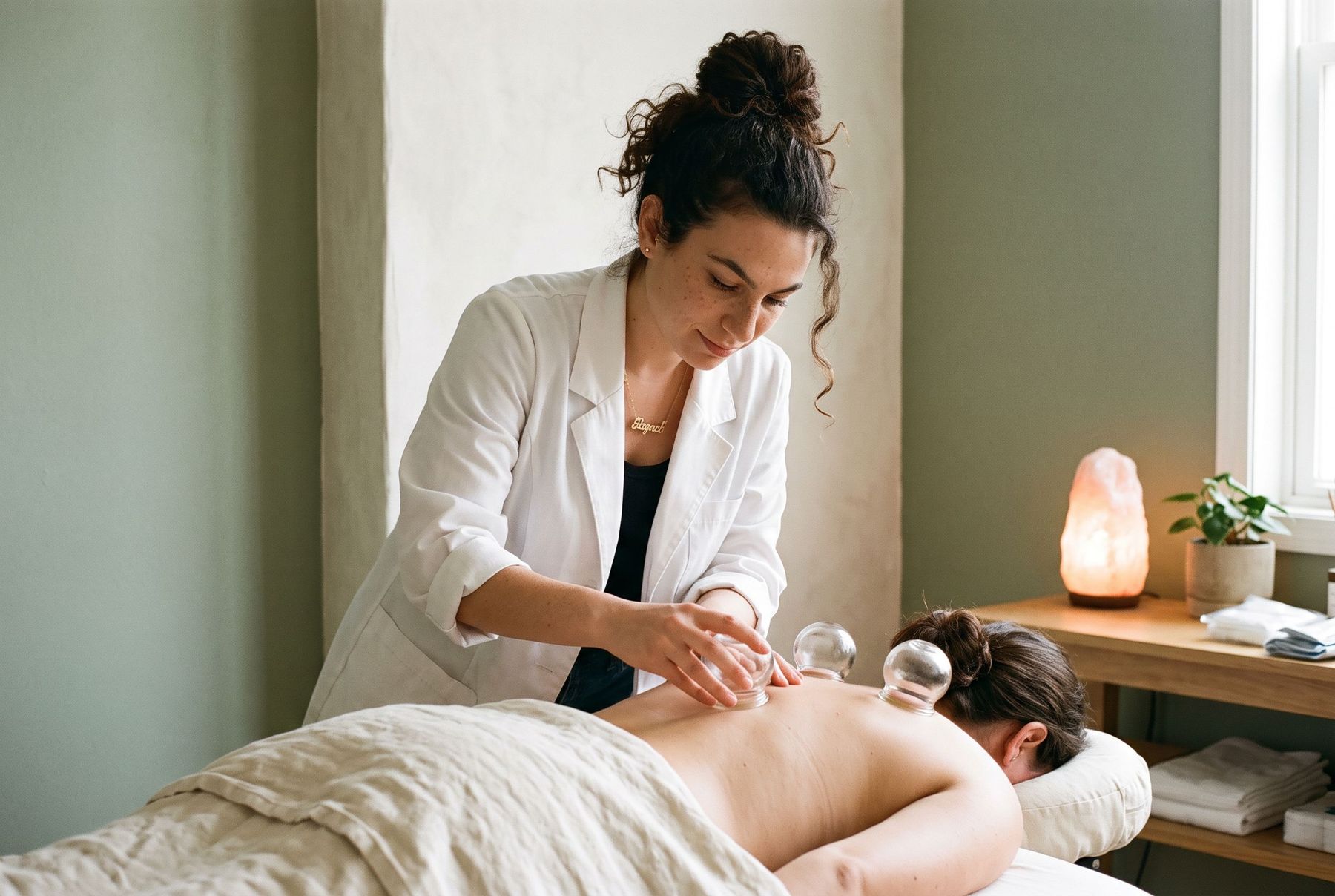
- Stationary cupping: cups stay in place for 5 to 10 minutes over tight areas.
- Gliding (moving) cupping: cups slide over oiled skin like a deep-tissue massage.
- Fire cupping: the traditional method, using a brief flame to create suction inside glass cups. The flame never touches the skin.
- Light or "flash" cupping: quick, gentle cups for sensitive areas or first-timers.
What happens at a cupping session
We check where you hold tension and ask about recent workouts, injuries and any events coming up. Cups are placed or glided over the area, with suction adjusted to what feels comfortable. When cupping is part of an acupuncture visit it is usually done before or after the needles, at no extra charge.
About the cupping marks
Cupping often leaves round, painless marks that fade in three to seven days. Their color reflects circulation in the tissue, not impact bruising like a knock would cause. If you have a wedding, photo shoot or a backless outfit planned, let us know: we can use lighter suction, gliding cups or a different area.
How often should I get cupping?
For a flare of neck or back tension, weekly sessions for three to four weeks usually make a clear difference. Athletes and desk workers often book every two to four weeks to stay ahead of tightness.
Cost and insurance
Cupping therapy starts at $85 (stand-alone session, about 30 minutes). Follow-up acupuncture is $140 for about 60 minutes, with cupping or electroacupuncture included when needed, and packages lower the per-visit cost. We are an out-of-network provider: you pay at each visit and receive a superbill to submit to your insurer, and many PPO plans reimburse part of the fee. HSA and FSA cards are accepted. See every fee on pricing & insurance.
When to see a doctor first
Cupping is not used over broken skin, varicose veins, recent injuries or sunburn, over the abdomen or lower back during pregnancy, or for people with bleeding disorders or on blood thinners without discussion first.
Getting to our Midtown office
We are on West 45th Street between Fifth and Sixth Avenues, an easy stop before or after work for patients from Midtown offices, Bryant Park, Grand Central and Times Square.
Fifth Element Acupuncture, 25 W 45th St, Suite 507, New York, NY 10036 · (347) 596-0931 · Directions
B, D, F, M to 42 St–Bryant Park · 7 to 5 Av · 4, 5, 6, S and Metro-North at Grand Central (6-min walk) · Times Sq–42 St (8-min walk)
How to book
Answer a few short questions online and we will call within one business day to confirm a time, or call (347) 596-0931. New patients start with a 90-minute first visit. Evening and Saturday appointments are available, and care is offered in English and Russian.
Acupuncture and Chinese medicine complement, and do not replace, care from your physician. Results vary from person to person. Please continue any treatment your doctor has prescribed and tell us about medications you take. Photos are illustrative.